June mornings in northern Maine are often wet and cold, yet full of bird song. Even though the foliage is luscious and bright green, temperatures at dawn can hover near freezing. It is here deep in the backwoods that two biologists find themselves for the next four days in search of an increasingly rare bird species. To make the most of their mission, Ed Jenkins and Mark Burton of the Biodiversity Research Institute are forced to embrace the chilly darkness and begin their daily 10-hour bushwhack journey through saturated vegetation from the previous day’s rain in search of their target species. Over the course of this trip, they will navigate miles of bumpy, unpaved North Maine Woods roads, dodge moose crossings, and climb over logging slash. Their goal: find and capture breeding Rusty Blackbirds.
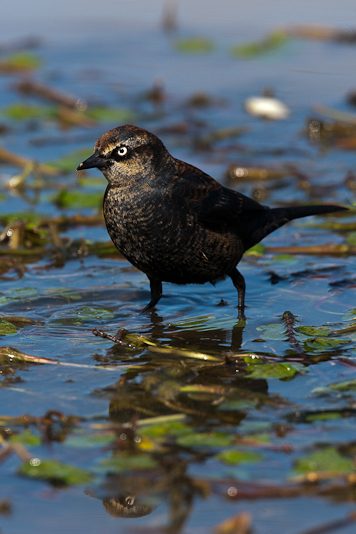
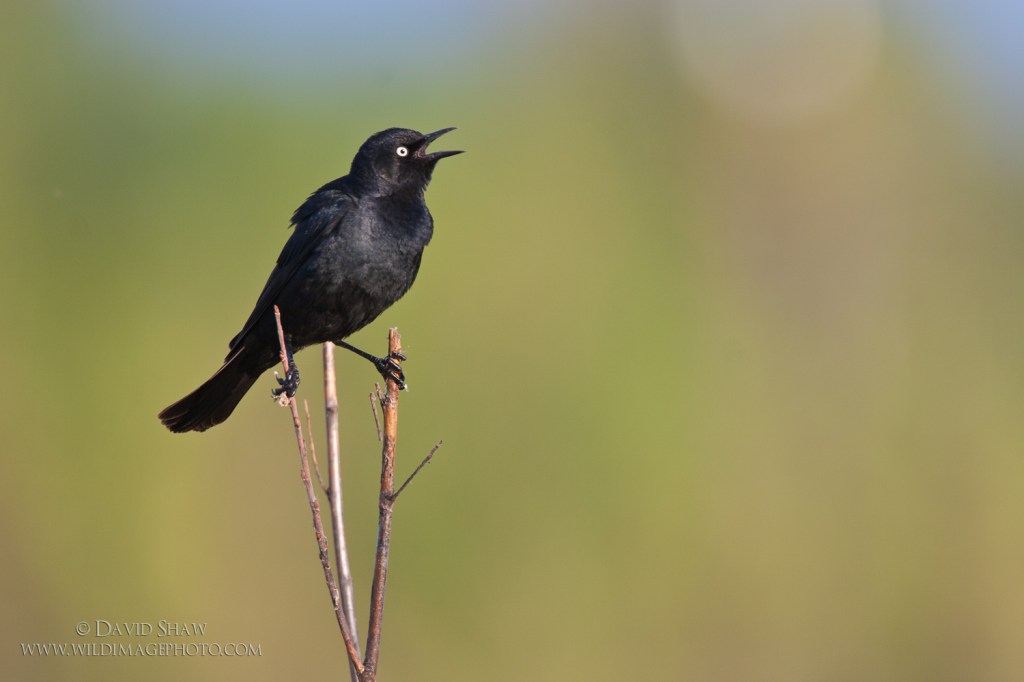
Rusty Blackbirds (Euphagus carolinus) or “Rusties” as some bird biologists affectionately refer to them, are the most northern breeding blackbird in North American. Found in unaltered wooded wetlands, bogs, muskeg swamps, beaver ponds, and streams, these birds summer in only the most pristine and wild places. Exemplary breeding habitats are found in northern New England (Maine, New Hampshire, Vermont), Canada, Alaska, and the Adirondack Mountains of New York where sphagnum/spruce bogs are abundant and relatively undisturbed. The Rusty’s southeastern US wintering range, however, is more varied and less specialized. Being opportunistic feeders, their diets range from acorn masts, pine seeds, fruit, and insects in natural settings, or they can be found foraging in dumps alongside seagulls or in agricultural fields with blackbird allies (Common Grackle, Brewer’s Blackbird, Red-winged Blackbird) (Avery 2020). This substantial dichotomy of their summer and wintering grounds, however, poses a challenge to the species’ overall success.
While Rusty Blackbirds exhibit high survival and nest success while breeding, 85-95% of the species population has declined since 1970 (Avery 2020). This is alarming biologists but no one factor can be pinned down as the culprit. Reasons may include loss of wetlands and wintering habitats in the southeast, contaminants in breeding grounds, inadvertent poisoning targeted at other nuisance blackbirds on wintering roosts, increasing disturbance to breeding boreal wetlands, increased acid precipitation, and drying of wetlands with warming climate.
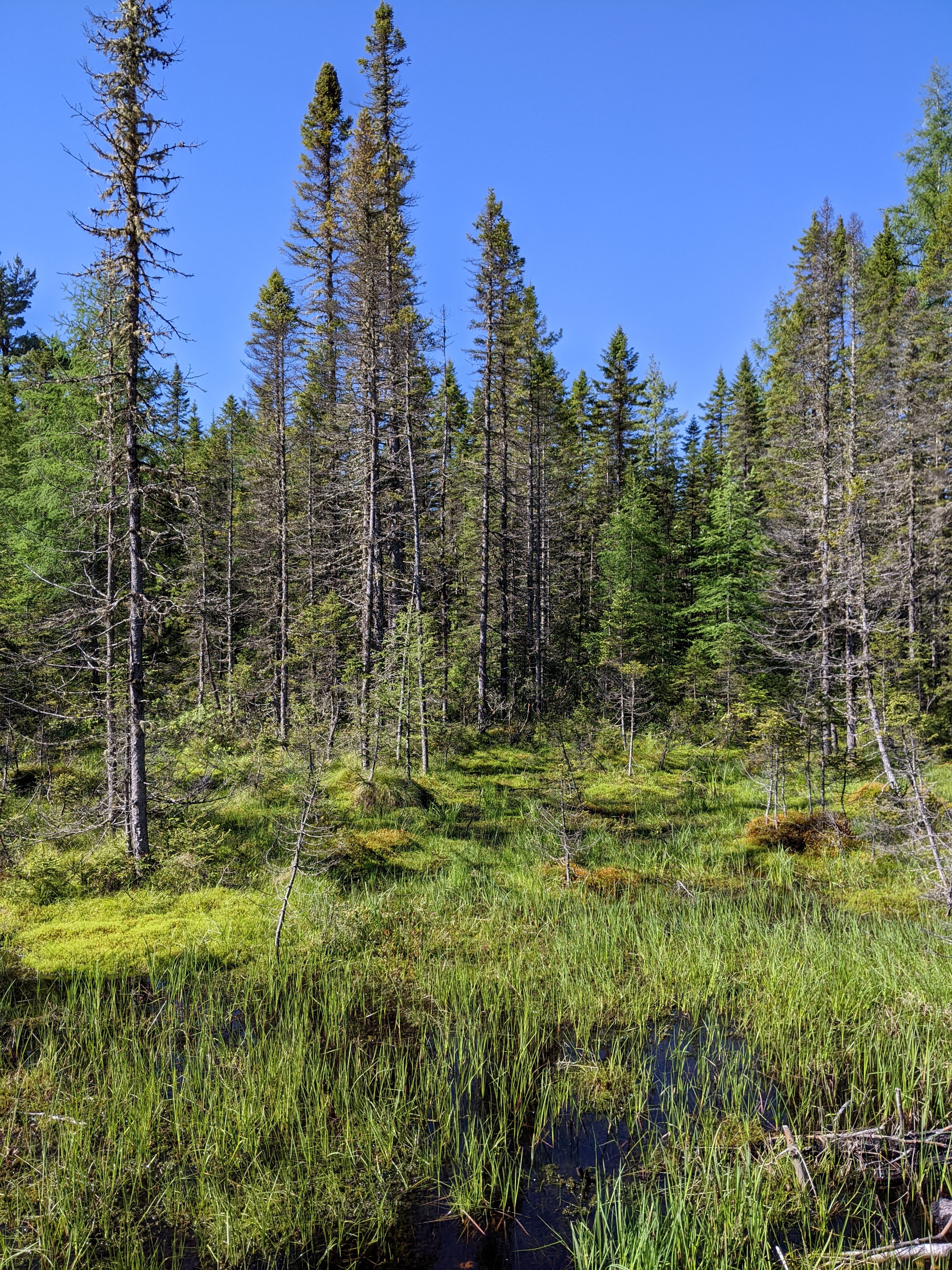
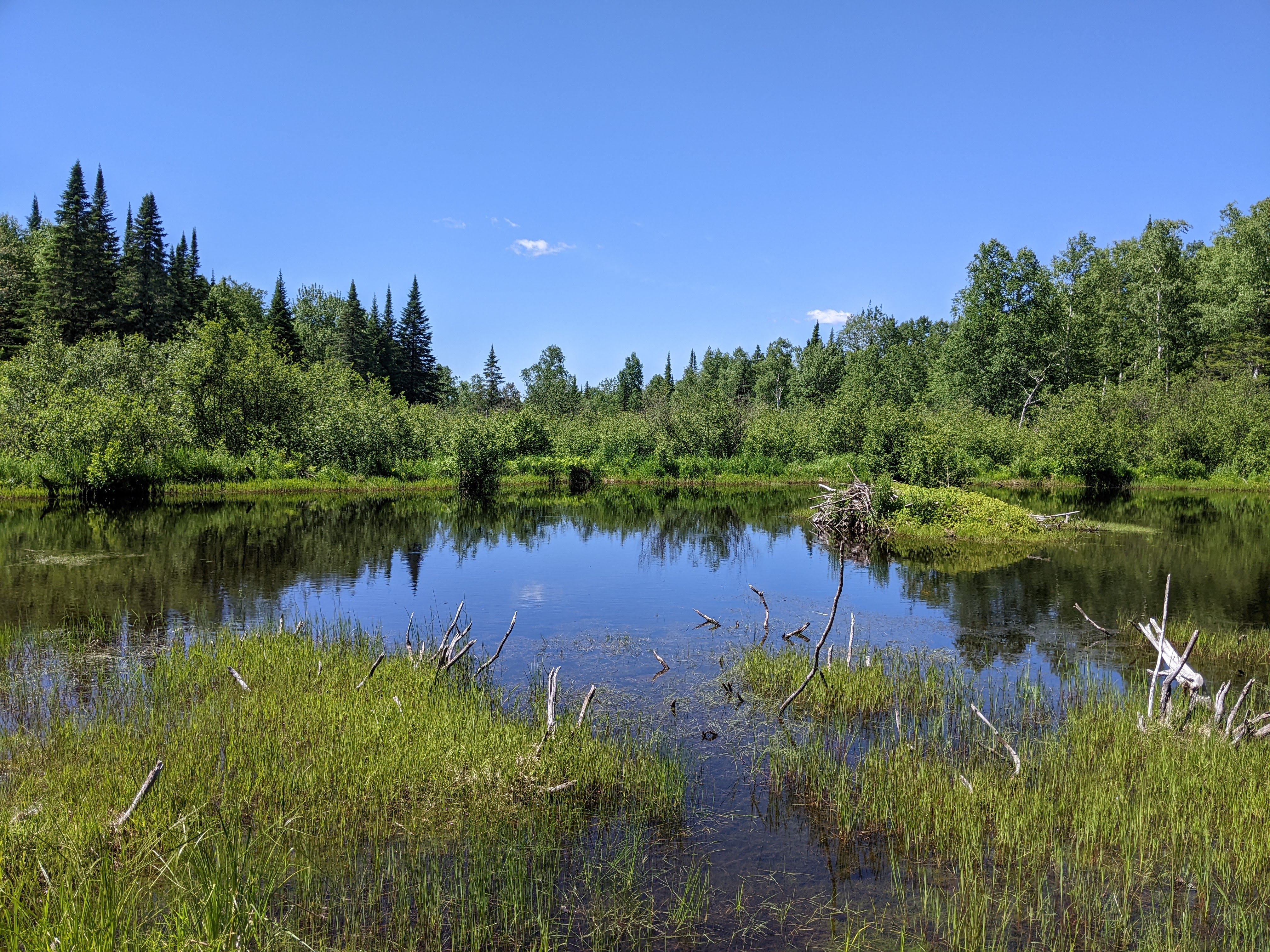
Typical Rusty Blackbird breeding habitat in northern Maine. Photo by Ed Jenkins.
The possibility of mercury poisoning in Rusties is of recent concern, particularly in northeastern North America. Edmonds et al. (2010) found that blood and feather mercury concentrations were more than 3x higher in Rusty Blackbirds sampled from Acadian forests of northern New England and eastern Canada compared to those sampled in Alaska. Even Rusty Blackbirds wintering in the southeast had 3 to 4 times less mercury in their blood. The working hypothesis for this phenomenon is that mercury becomes bioavailable in the form of methylmercury in boreal wetlands which is taken up by birds through their diet of insects that were also exposed to methylmercury. And the reason for higher levels in northeastern wetlands vs Alaskan wetlands? Far higher mercury deposition rates from industrial emissions wafting into the region.
To find out more about the Rusty population breeding in Maine, the Biodiversity Research Institute, a world leader in exposure and effects of mercury in wildlife and ecosystems research, set their sites north. This is where Ed and Mark come in. In June 2022, they planned to collect blood samples and band Rusty Blackbirds in the St. Johns River Forest Preserve. Although all 185,000 acres of the preserve is open to the public, courtesy of the Nature Conservancy, getting there is another story. The TNC recommends filling at least one extra canister of gas for your car, a tire repair kit, and cash to pay the North Maine Woods checkpoint fees. Drivers are advised to drive slowly and with headlights on. Not so that you don’t collide with moose, which is a very real possibility, but to be visible to massive logging trucks with whom you will be sharing the road. Last but not least, don’t forget your passport! Even if you are traveling from Maine, you may need to exit the country only to drive back across the border at a North Maine Woods checkpoint bordering Quebec. Bypassing much of the unmarked or poorly maintained logging roads of northern Maine is the safest and fastest route to the Preserve.
To access their study area, Ed and Mark entered through the Saint-Pamphile North Maine Woods checkpoint in Quebec, about 100 miles after first entering Canada in Saint-Théophile. Setting off from Portland with two extra cans of gas, binoculars, notebooks, first aid kit, waterproof backpacks, rubber boots, and beer in tow, their entire journey took more than nine hours. Exhausted from their drive, and deep into the North Maine Woods, they were almost at their accommodations when they spotted a group of Rusty Blackbirds beside the road. This was an uplifting moment and surely the sign of a successful trip.
The next morning, Mark and Ed set off at 5:30 to spend the rest of the day in the surrounding woods and wetlands. They had packed with them all of the necessary equipment needed for catching birds: mist nets and netting polls which can be up to 8 feet tall, a speaker with pre-loaded Rusty calls to lure them in, GPS geolocators, and blood sampling equipment to test birds for mercury exposure.
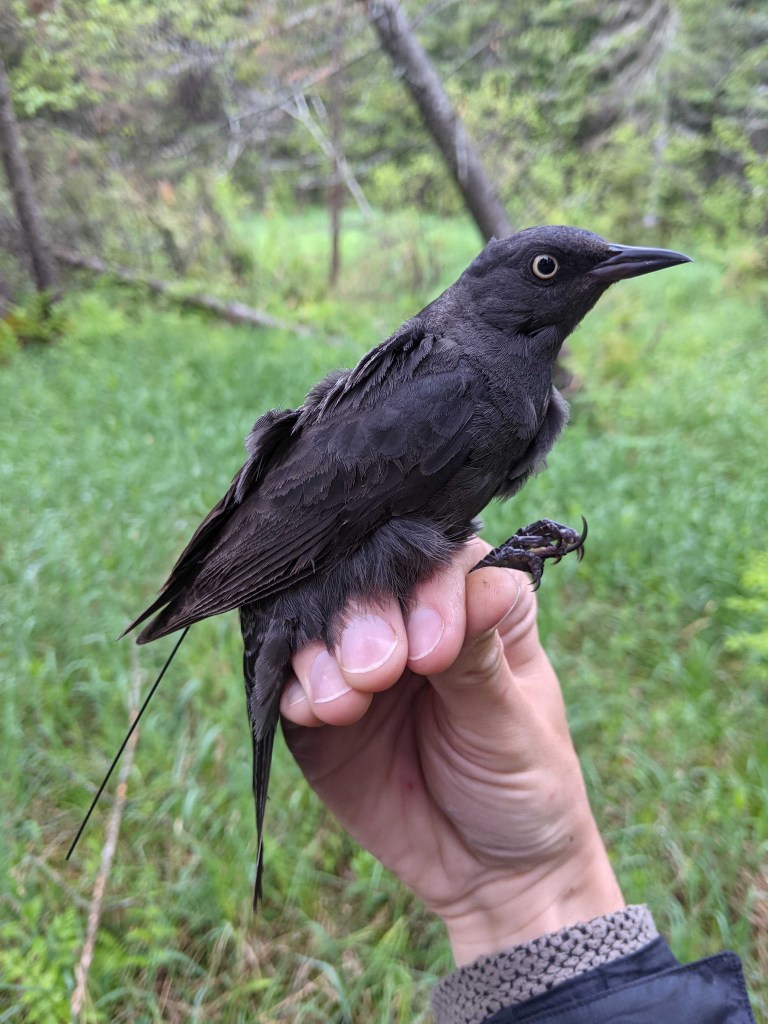
Photo by Ed Jenkins
Despite their high hopes, the first two days consisted of heavy rain and temperatures no warmer than 45 degrees and most disappointingly, no Rusty sightings. On day three came a break in the weather and a change in luck. Retracing their steps, Ed and Mark found the group of Rusty Blackbirds they saw on their way in the night they arrived! The group was comprised of a male and female pair and their nearly full-grown fledgling feeding along a roadside ditch. Not the habitat they expected to find them in, but hey, they found what they were looking for. Eager for a win, Ed and Mark set up nets, observed their behavior, and waited for one to fly their way. No luck. The family of three didn’t stay for long before moving on to another ditch to forage in the early morning sun. Undeterred, Ed and Mark moved on as well to search for more birds in the kinds of habitats you would expect to find Rusties: sphagnum bogs, beaver ponds, alder swamps, lake edges, and sedge meadows. No Rusty Blackbirds were found for the rest of the day. On day four they repeated this effort, only this time rising two hours earlier. They found the same family group, but still no captures.
That night, Mark and Ed toasted their effort. With one day left, the trip was not turning out to be the success they hoped it would, but it was not without excitement. The pair observed 9 moose, a black bear, many snowshoe hare, and 94 species of birds. When later asked about the expedition, Ed’s highlights included breeding Sandhill Cranes, Wilson’s Warbler, Lincoln’s Sparrow, Spruce Grouse, Boreal Chickadees, and Canada Jays.
On their final morning, giving it one last try, they set their sights in a different direction: east towards Presque Isle. They searched primarily by vehicle as they simultaneously made their way back to Portland. As they went along, the potential for Rusty habitat only seemed to grow less and less promising. As mentioned earlier, the logging industry in this area of Maine is quite prevalent. Much of the area they explored that day was clear cut; no place for a bird seeking forested wetlands.
In total, Mark and Ed searched around 50 sites of textbook suitable habitat using playback calls to attract Rusty Blackbirds. Ed’s hypothesis for their lack of sightings is that he and Mark arrived too late in the breeding season and, although seemingly good on paper, they might just not have been in the right habitat. More exploration in the region is needed for this to be confirmed, but Ed and Mark’s findings of Rusties in northern Maine might be the new norm. Currently, Rusty Blackbirds face several challenges on their breeding grounds. Because they feed in wetlands, which readily convert mercury to the more harmful and bioavailable methylmercury, Rusty Blackbirds often have relatively high levels of this toxic metal in their bodies which can lead to behavioral, immunological, neurological, physiological, and reproductive impairment. Additionally, recent research shows that the Rusty Blackbird breeding range is shrinking in size and retracting to the north, suggesting climate change may also be affecting the species (Powell 2008, McClure et al. 2012). Furthermore, warmer weather patterns in some regions cause the wetlands that Rusty Blackbirds rely on for food to dry up, and may also be shifting the timing of insect development (International Rusty Blackbird Working Group).
If you’ve never heard a Rusty Blackbird, take a listen. Their calls are hard to describe, because it just simply isn’t a sound humans can easily replicate. The Cornell Lab of Ornithology describes it as sounding like “the creak of rusty hinges”. Whether they are named for their rusty colored plumage in the winter or for their rusty, creaky songs, Rusty Blackbirds are the symbol of a vital ecosystem. Wetlands of all kinds are in need of protection and so are the birds that rely on them. I hope to see a rebound of both in my lifetime and I hope to hear the cacophonous sound of Rusties filling a wetland as they arrive in the north woods for another breeding season like they have done for thousands of years before.
 The Bog Blogger
Yayyyyy it’s posted before the new year! You did it. Nice job.
ThanksTodd
<
div dir=”ltr”>
<
blockquote type=”cite”>
LikeLiked by 1 person
Phew!! That was my goal!
LikeLike
Great article Sarah! I like that you had the link so I could hear their call, that was cool. So sad that their numbers and habitat are declining. So many species are endangered or have become extinct at alarming rates because of mercury and other chemicals, loss of habitat, climate change etc… because of human activity 😦 Humans suck! Not all though – I’m glad you are sharing your knowledge to bring awareness.
LikeLike